The guide
Directory listings fill beds from families who are already searching and comparing. Meta ads fill beds by reaching the decision-maker earlier, often before any directory search begins. For most homes the fastest route is not either or: the directory catches demand that already exists, while Meta creates and captures demand the directory never sees.
Updated July 2026
The two channels reach different families at different moments. In brief:

Who each reaches
Directories reach active searchers; Meta reaches the family member before they become one. A directory visitor has typed something like "care homes near me" and is now scanning a list. That is valuable, late-stage demand. But the person carrying the decision, usually the adult child, though often another close family member such as a spouse, sibling, niece or nephew, spends far more of their week on social platforms than on directory sites.
Facebook and Messenger reach 93% of UK online adults, with 35 to 54 year olds averaging around 50 minutes a day and Facebook dominating social media time among the over-55s (Ofcom, Online Nation 2025). Meta advertising puts your home in front of that person mid-scroll, at the moment they are quietly carrying the decision, and lets your home have the conversation before the enquiry.
The directory
A directory does the comparing stage well. It reaches its limit at the persuading stage.
Where it reaches its limit
On a directory your home appears in the same format as every nearby competitor, differentiated mostly by review score and photography. You cannot control the context, you share the page with alternatives, and the family arrives already in comparison mode. A directory cannot make a family feel what daily life in your home is really like.
The Meta side
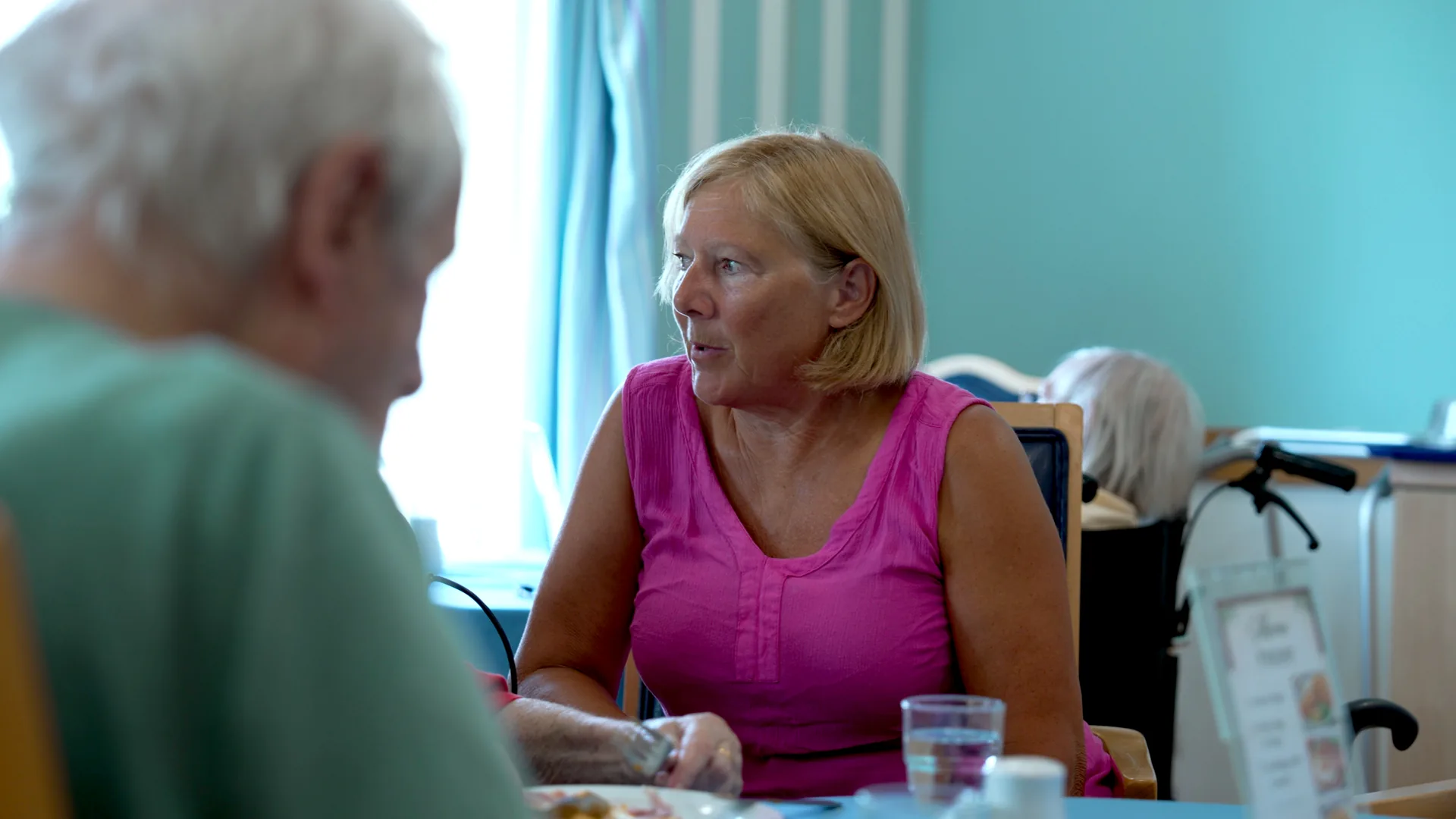
Meta ads do the storytelling stage well. Instead of a listing card, the family sees a film of a real family talking about real care, in an environment your home controls. That reaches private-pay families early, families choosing a home directly, who value an honest picture of daily life more than a features list. It lets you have the reassuring conversation before anyone is lined up against ten other homes.
Meta's ceiling is the opposite of the directory's. It does not catch the family who is searching tonight and wants a shortlist by tomorrow; that family is on Google and the directories. Meta campaigns also depend on the quality of what you show. Generic stock imagery underperforms, which is why film built on real residents and real families, never AI, is the asset that makes the channel work.
What fills beds faster
For speed to the very next enquiry, an established directory presence usually wins, because it harvests demand that already exists this week. For speed to a full home, Meta usually wins, because it reaches many more of the right families and starts conversations the directory never would.
With national average occupancy at 88.7% in 2025 (Knight Frank Care Homes Trading Performance Review 2025), most homes are working to fill their final few beds. Those last beds rarely come from being one card among many. They come from being the home a family already feels they know.
Side by side
Neither replaces the other. They catch different families at different moments.
| Directory listing | Meta advertising | |
|---|---|---|
| Reaches families | Already searching and comparing | Earlier, before comparison begins |
| Your home appears | Alongside nearby competitors, same format | Alone, in a context you control |
| Strongest at | Catching late-stage demand | Creating demand and building trust early |
| Depends on | Reviews, photos, response speed | Quality of story and film |
| Ceiling | Shared shelf, comparison mode | Misses tonight's active searcher |
| Time to first enquiries | Fast if demand exists locally | Typically weeks as the campaign warms |
How to decide
Decide by the gap you need to close, not by the channel's reputation. It splits into three honest cases.
Fix the directory first. That is the fastest available demand, families who are already searching this week and expect to find you where they look.
You have usually saturated late-stage demand locally. The fastest growth from here comes from adding Meta, reaching the families who are not searching yet.
Treat Meta plus real family film as the long-term lever, with the directory kept as the baseline presence families expect to see.
The risks
The main directory risk is invisibility inside the platform. The main Meta risk is spending behind weak creative. Both have the same cure.
On Meta
An advert that looks like an advert gets scrolled past, and the spend teaches you nothing. The cure is the same as the directory's: show real life in the home honestly and generously, on whichever shelf the family finds you.

Common questions
Neither replaces the other. Directory listings convert families already comparing homes; Meta ads reach the decision-maker earlier and let your home tell its own story. Homes that need enquiries soonest usually run both, with the directory as the baseline and Meta as the growth lever.
Yes. carehome.co.uk alone carries around 16,500 listings and roughly 15 million visits a year, and families genuinely shortlist from it. The ceiling is that your home appears alongside every nearby competitor in the same format, competing mostly on reviews and photos.
A well-built campaign can produce first enquiries within weeks, but speed depends on the story the home can tell. Campaigns built on real families and real footage warm up faster because they earn trust on the first view.
Usually not. The channels catch different families at different moments, and dropping the listing hands that shelf space to neighbours. Review what each channel contributes per enquiry, side by side, over a quarter.
Keep reading
Whether Meta advertising genuinely works for care homes, how the targeting reaches the right family, and what makes it pay.
How to increase occupancyThe wider picture on lifting occupancy: who decides, where they look, and how interest becomes a move-in.
Attracting self-funding residentsHow homes attract self-funding families who choose directly and value an honest picture of daily life.