The guide
Families judge a care home mostly on reputation and on whether they can picture daily life inside it, and they do it fast, on a phone, before speaking to anyone. Research with 1,000 UK families who had recently arranged care found reputation was the single most important factor in choosing a provider, ahead of cost, staff experience and location. Formal inspection reports mattered far less than most operators assume.
Updated August 2026
Families decide quickly, on a phone, and mostly on what they can see. In brief:
What the research says
Care England and Log my Care surveyed 1,000 UK families who had recently organised care for a relative.
Reputation was named as the most important factor by 30 per cent, ahead of cost at 25 per cent, staff experience at 24 per cent and location at 24 per cent. Only 19 per cent said they used inspection reports when researching, and around 11 per cent counted them among the most important factors in the final decision.
The same research found 97 per cent described arranging care as difficult, 61 per cent felt overwhelmed, anxious, frustrated or stressed, and 40 per cent said the hardest single thing was working out who to trust.
That is the person arriving on your website: someone under strain, in a hurry, trying to work out who to believe.
The order they look in
Photographs, then daily life, then fees, then how to contact you.
The signals
Five things build trust. Any one of six can lose it.
Loses the family
Stock photography. No sense of daily life. Fees nowhere. A site that is slow or awkward on a phone. An events page from two summers ago. No obvious way to make contact.
Any one of these is usually enough, because the family has three other homes open in other tabs. They are not building a case against you. They are reducing a list.
Where they are
Ofcom's Online Nation 2025 report found most UK online time is spent on a smartphone, that Google Search was used by 82 per cent of online adults in the month, and that Facebook and Messenger were used by 93 per cent.
The decision-maker is usually a close family member, most often an adult child but frequently a spouse, sibling, niece or grandchild, doing this after work and after the children are in bed.
Design for that person, on that device, at that hour.
This week
Four things, none of which require a new website.
Replace any stock photograph with a real one, even an imperfect one.
Write an honest account of a typical day and put it where it can be found.
Add a plain paragraph about fees and what the first conversation covers.
Make the phone number tappable at the top of every page.
Then look at the wider picture. If families are not reaching the site at all, that is a different problem, covered in why families are not finding your care home online. If they are arriving and leaving, why your website is not bringing in enquiries is the place to start, and what a great care home website contains sets out the whole picture.

Common questions
Mostly on reputation and on whether they can picture daily life. UK research with 1,000 families who recently arranged care found reputation was the single most important factor in choosing a provider at 30 per cent, ahead of cost at 25 per cent, staff experience at 24 per cent and location at 24 per cent. Formal inspection reports mattered far less than operators expect.
Fewer than most operators assume. In the Care England and Log my Care research only 19 per cent said they used inspection reports when researching providers, and around 11 per cent counted them among the most important factors in the final decision. Display your rating, but do not expect it to be what wins the family.
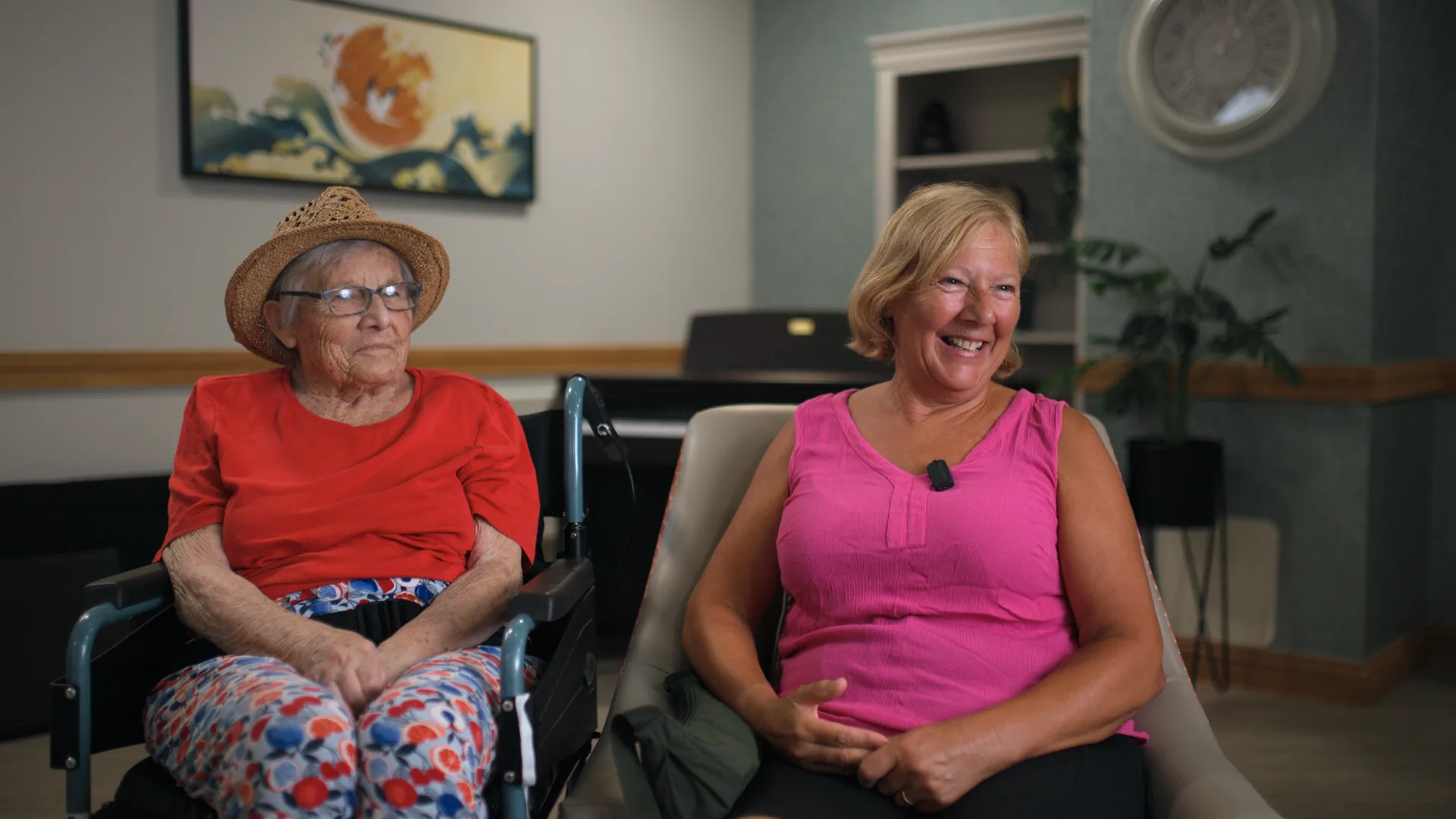
Usually photographs, on a phone. Before reading anything they are forming an instinctive judgement about whether the place looks like somewhere their relative would be content. Stock imagery breaks that instantly, because most people recognise it.
The overall search takes weeks, but the judgement about any individual home is formed very quickly, often in under a minute of looking at a page. That is why speed, images and the first line of text carry so much weight.
No sense of daily life, no visible fees information, obviously staged or stock photographs, out of date pages, and no clear way to make contact. Any one of these is usually enough when the family has three other homes open in other tabs.
Keep reading