The guide
A refresh of an existing site usually takes a few weeks. A full design and build usually takes longer, commonly six to ten weeks including a photography or filming day. The design and development work is rarely what sets the timeline. What sets it is how quickly the home can supply photographs, current fees and staff details while also running a home.
Updated August 2026
Most of the clock belongs to the home, not the developer. In brief:
The phases
Four phases, and the home's involvement is heaviest in the second.
What makes this home different, who it serves, what families ask on the phone, what the manager wishes people understood.
Photographs or a capture day, fees information, staff names and roles, consent, the CQC rating for display in England. This is where projects live or die.
Structure, writing, design, development and a review point before anything goes live.
You receive the site, the domain and the content, plus a plain explanation of how to keep it current.
Where it slips
Because it is the only phase the home cannot delegate. Nobody else has your photographs, your fee structure or your staff's consent. And the people who hold those things are the same people running a home that does not pause for a website project.
The fix is unglamorous and it works: name one person as the owner of the gathering job before the project starts, and give them a deadline that is earlier than the one that matters. Homes that do this finish on time. Homes that do not finish in three months.
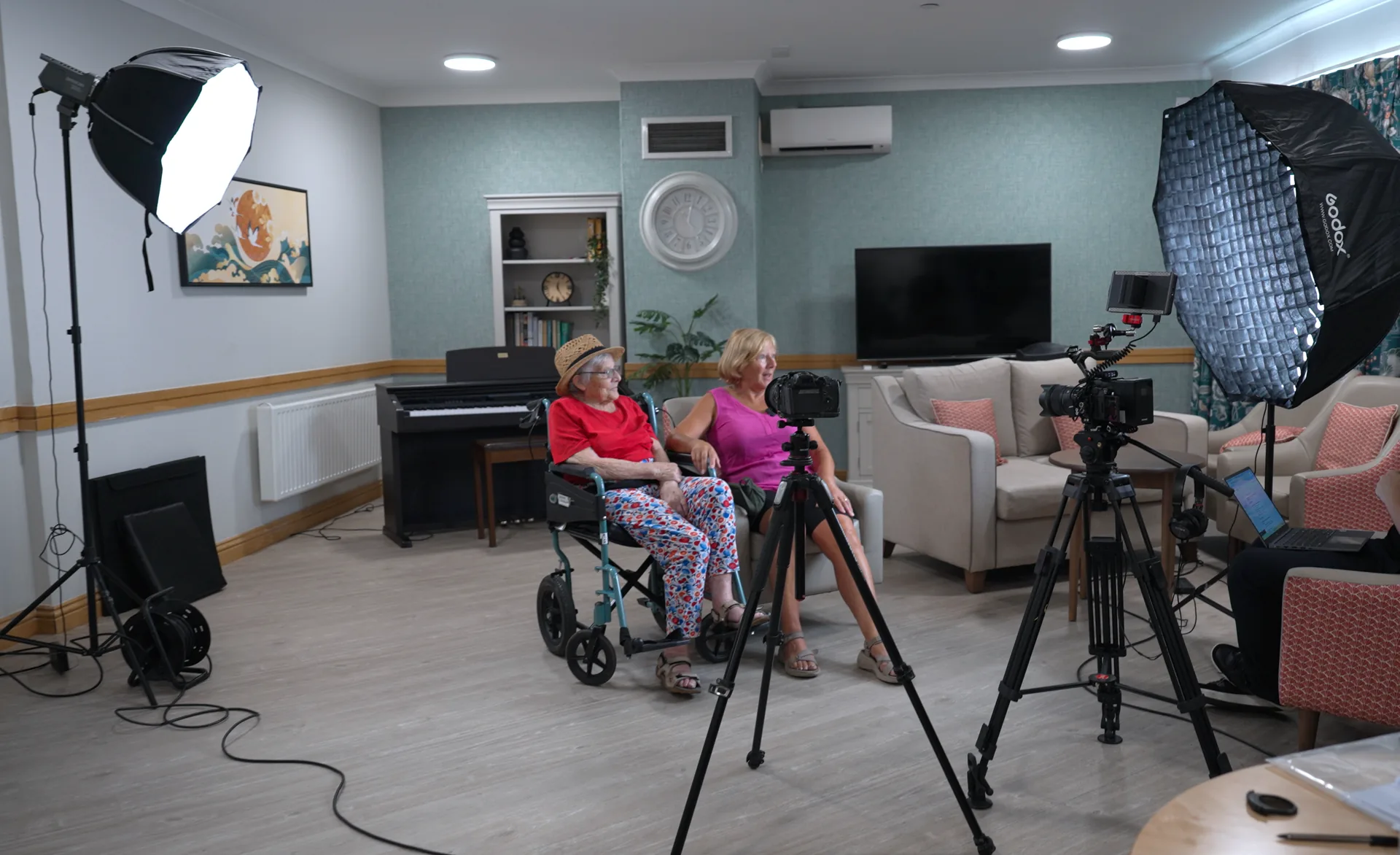
The capture day
It adds a scheduling step and usually saves weeks. A capture day replaces the slow, unwinnable process of asking a busy home to email good photographs. It also produces the thing the site actually needs.
That matters because of what families are looking for. Care England and Log my Care surveyed 1,000 UK families who had recently arranged care and found reputation was the top factor in choosing a provider at 30 per cent, ahead of cost, staff experience and location, and that 40 per cent said the hardest part was working out who to trust. Real images of real people are how a website answers that.
To see what those pages should hold, read what a great care home website contains.
Going faster
Yes, two ways, both with a trade.
The trade
A template gets you live quickly and leaves you looking like the other homes on the same template, which is a problem precisely at the moment a family is comparing three of you.
Our comparison of a template builder against a site built for your home sets out where that ceiling sits.
After it goes live
Existing visitors convert better almost immediately. New visibility takes months.
The people already finding you now get their questions answered and a clear route to contact you, so more of them do.
Search engines and AI answer engines need time to find, index and trust new pages. Expect months rather than weeks for that, and judge the site on both.
Before you start
Four things, and they will take weeks off the timeline.
How we run it
We build websites for elderly care homes across the UK and beyond, as a refresh, a bespoke build written around your home, or a showcase that includes a day capturing it properly. A refresh can be live within a week once we have your photographs and words; the bespoke build takes longer because every page is written around your home; the showcase runs longest because it starts with a filming and photography day.
The care home websites page sets out what each includes, and we will give you an honest date rather than a hopeful one. If you would like to talk it through, get in touch.
Common questions
A refresh of an existing site is usually a few weeks. A full design and build is usually longer, commonly six to ten weeks including a photography or filming day. The design and development work is rarely the constraint. What sets the timeline is how quickly the home can supply photographs, fees information and staff details while also running a home.
Almost always the gathering stage. Photographs, current fees, staff names and consent forms sit with the home, and the home is busy. Naming one person as the owner of that job at the start is the single biggest thing that keeps a project on time.
Yes, if you already have good photographs and clear fees information, or if you accept a template. A site can go live in days that way. The trade is that speed usually costs distinctiveness, and distinctiveness is what makes a family choose you over the home down the road.
Existing visitors convert better almost immediately, because the site now answers their questions. New search visibility takes longer, usually months rather than weeks, because search engines and AI answer engines need time to find and trust new pages.
It adds a scheduling step and usually saves weeks overall, because it replaces months of chasing the home for images that never quite arrive. It also produces the material that makes the site work.
Keep reading
What a finished site should hold, and what families look for first.
Template builder or built for you?Where a template gets you quickly, and where it reaches its ceiling.
Redesign or start again?A straight test for whether your site needs repairs or a rebuild.