The guide
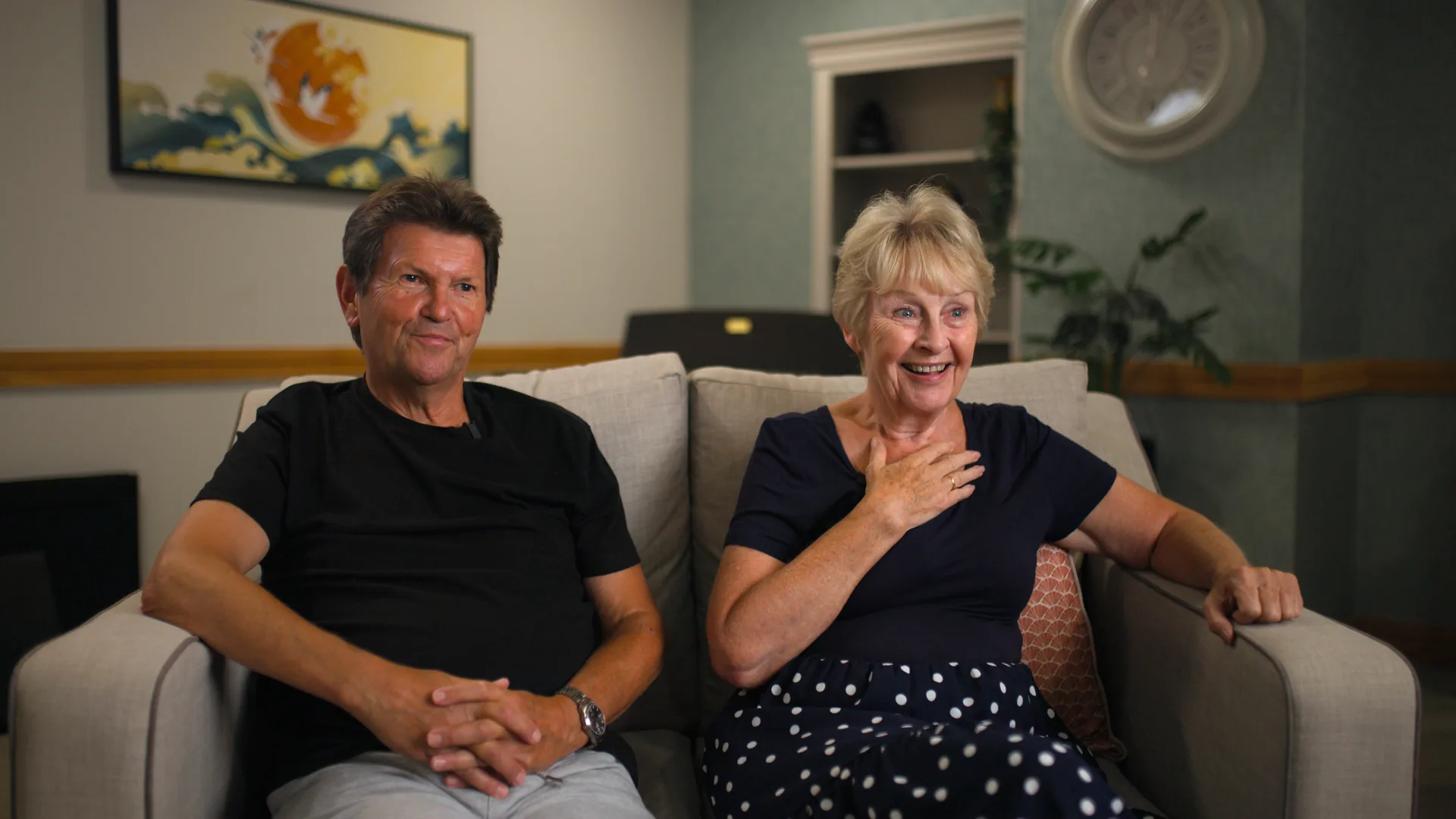
The film that makes a family enquire is a real family talking about the decision they made and how it turned out. It is not a tour of the building, and it is not a montage of the garden in summer. Families are not choosing between buildings. They are deciding whether to hand over the care of someone they love, and the only thing that answers that is another person who has already done it.
Updated September 2026
Most homes commission the film that does the least work. In brief:
The three things
Three things, consistently. And they matter more now than a year ago: Wyzowl's State of Video Marketing 2026 found 63% of video marketers have now used AI tools to create or edit video, up from 51%, while 89% of consumers say video quality affects whether they trust a brand. It is a global survey, not care-specific, so read it as a direction of travel. As more of what people watch is generated, the recognisably real thing gains value.
A daughter roughly the age of the person watching, describing a decision they recognise. Recognition is what converts watching into ringing.
The guilt, the argument with a sibling, the week they could not sleep. A film where nothing was hard is a film nobody believes. The relief only lands if the difficulty was allowed on screen first, and the film should always end on relief.
Not "the staff are lovely" but the carer who learned that her father takes his tea with the bag left in. Specifics are the only thing that cannot be faked.
That is why a family telling their own story outperforms everything else a home can film. A care home is one of the few advertisers with something genuinely real to show.
Side by side
Each format does a different job. Most homes commission the one that does the least.
| Film | What it does well | Where it stops | Best used |
|---|---|---|---|
| Family testimonial | Answers the trust question that nothing else answers. Gives a stranger permission to consider you | Needs a family willing to speak, and consent takes time | Paid social, website, follow-up after an enquiry |
| Manager or staff introduction | Puts a face to the voice that will answer the phone. Lowers the cost of the first call | Reassures people already interested, rarely starts interest | Website enquiry page, Google Business Profile |
| Day in the life | Shows what a Tuesday afternoon is actually like. Answers the question behind every visit | Only works if the home is genuinely good, and it is | Website, social, before a booked visit |
| Activity or event clips | Cheap, frequent, keeps a page alive. Reassures existing families | Looks the same as every other home's clips | Social, in-house, filmed on a phone |
| Facility tour | Answers what the place looks like. Reduces purely curious visits | Cannot say how it feels to leave a parent there | Website, directory profile |
Read that table one way and it says something uncomfortable. The film most homes pay for, the tour, sits at the bottom. The film that changes behaviour needs a family to sit down and talk, which is the hardest thing to arrange and the easiest thing to postpone. For the day-in-the-life row in more depth, see how to show families what daily life is really like.
The tour, honestly
Tours work, within a limit. Nothing here says do not make one.
Where it reaches its limit
A tour proves the carpets are clean. It cannot prove that someone will notice when your mother has had a bad night. Every home's corridors look similar on camera, so a tour rarely separates you from the home three miles away.
The Care England and Log my Care study of 1,000 people arranging care, run with Sapio Research, found reputation was the top factor at 30%, ahead of safety at 29%, while only 19% used inspection reports. Families are looking for evidence of how a home behaves. A building cannot give them that. A person can.
Length
Short where you are interrupting someone, longer where they chose to watch. Wistia's State of Video 2026 found videos under one minute hold roughly 52% average engagement, against roughly 43% for videos of three to five minutes, and Wyzowl found 71% of marketers put the effective range between thirty seconds and two minutes.
In practice, for a care home: under a minute for anything running as paid social to local families, two to three minutes for the version on your own website where someone has already decided they are interested.
One filming day should produce both, plus a handful of short cuts. If a supplier hands you a single four-minute film and nothing else, you have been given an asset for the reception screen, not something that fills beds.
Where it is watched
Ofcom's Media Nations 2026 report, published on 29 July 2026, found average daily YouTube viewing on television sets has doubled since 2022, from 9 minutes per person to 19, with total YouTube viewing across devices in the home at 41 minutes a day. Weekly YouTube reach among people aged 75 and over rose from 28% in 2022 to 33% in 2025.
The decision is usually carried by an adult child, though often by another close family member, and it is very rarely carried alone. Your film will be watched on a phone by the person leading the search and then, quite often, on a television by the rest of the family, including people well into their eighties. Make something that survives being seen on a large screen by an older relative who is not sure any of this is a good idea.
The order
Four steps, in this order.
One family, one afternoon, done with care. This is the film that earns enquiries, and nothing else substitutes for it.
Two or three minutes, no script. It costs almost nothing extra once the crew is there, and it lowers the temperature of every first phone call.
A short version for advertising, a longer version for the website, stills for the directory profile and the Google Business Profile.
Once a properly made film has set the tone, phone footage sits underneath it comfortably. Do it the other way round and the phone footage is all you have.
Once the films exist, where a finished family film should go is the next decision.
Cost and pace
There are four common models, and it is worth knowing which you are being offered before comparing anything.
Price moves with filming days, finished cuts, whether consent is handled for you, and whether the film is run as advertising or simply handed over. We walk through specifics on a call. If you are choosing a supplier, here is who makes professional films for care homes.
How long does it take? Roughly six weeks from first conversation to finished film, and the stage that slips is never the filming. It is finding a family who will speak and completing consent properly, which should never be rushed and should run through the home's own best interests process where capacity is a question. Filming is one day. Editing is one to two weeks. Everything else is people.
The avoidable four
Who this is for
This is for a home with beds to fill, a good reputation locally, and at least one family who would speak warmly if asked. That last condition is the real test.
Wait if your home is going through something that has not been resolved yet, because film makes a home more visible, and that is only good when what is seen is good. Wait also if nobody has the time to run the consent conversations properly, and check first whether families can find your home in the first place.
Common questions
A film of a real family talking about the decision they made and how it turned out. Families are not choosing between buildings, they are deciding whether to trust a home with someone they love, and only a person on camera can answer that. Tours, activity clips and staff introductions all have a job, but the family film is the one that moves someone from reading to ringing.
Yes, with a clear ceiling. A tour answers what the place looks like, which is a question families do have, and it reduces the number of visits booked purely to satisfy curiosity. What a tour cannot do is tell a family what it feels like to leave a parent there on a Tuesday evening. Make the tour, but do not expect it to produce enquiries on its own.
Short for anything that runs as an advert, longer only where someone has already chosen to watch. Wistia's State of Video 2026 found videos under one minute hold roughly 52% average engagement against roughly 43% for three to five minutes, and 71% of marketers in Wyzowl's 2026 survey put the effective range between thirty seconds and two minutes. In practice: under a minute on social, two to three minutes on the website.
No. We film real residents, real families and real staff, and we would not do it any other way. Wyzowl's 2026 survey found 63% of video marketers have now used AI tools to create or edit video, up from 51% a year earlier, and 89% of consumers say video quality affects whether they trust a brand. As synthetic video becomes ordinary, a recognisably real person is the only version of this film worth making.
One family testimonial, filmed properly, with the manager on camera for a short second piece if the day allows. That gives you the film that earns enquiries and the film that reassures the person who has already enquired. Tours, activity clips and staff profiles are worth adding later, and most of them can be made in-house once the first proper film exists to set the tone.
Keep reading
The case for real families on camera, and what makes one land.
Where the finished film goesHow to place a family film so it reaches the families searching now.
Who makes films for care homesThe kinds of supplier, what each does well, and what to ask before you hire.