The guide
Usually a close family member leads the search, most often an adult child, but almost nobody decides alone. The choice is normally settled by a small group: the person who searched, the person who handles the money, the person moving in where they are able to take part, and one or two relatives who get consulted and can say no.
Updated September 2026
If your marketing only has to convince the person who found you, you are marketing to about a quarter of the decision. In brief:
The four roles
Four roles, and one person rarely holds more than two of them. The searcher finds the options. The payer works out what is sustainable. The person moving in has the strongest claim on the decision. The consulted relatives rarely choose anything, but they can stop it: a brother on the phone two hundred miles away who says "that one looked a bit institutional" can end a shortlist in one sentence.
| Role | What they are actually judging | Where they look | What convinces them |
|---|---|---|---|
| The searcher | Is this a serious, findable home with a vacancy | Directories, Google, your website, social feeds | Clear provision, quick answers, a real person to contact |
| The payer or money manager | Is this sustainable and honestly priced | Your website, the enquiry call, the visit | Straight answers about fees and what is included, no evasion |
| The person moving in | Will I be alright here, and will I still be me | The visit, the atmosphere, the staff | Being spoken to directly, seeing daily life rather than a foyer |
| The consulted relatives | Is my family member making a mistake | Whatever gets forwarded to them, plus reviews | Something they can watch or read in two minutes without context |
Read across that table and the pattern is obvious. Three of the four judge you on material they are shown, rather than material they went looking for.
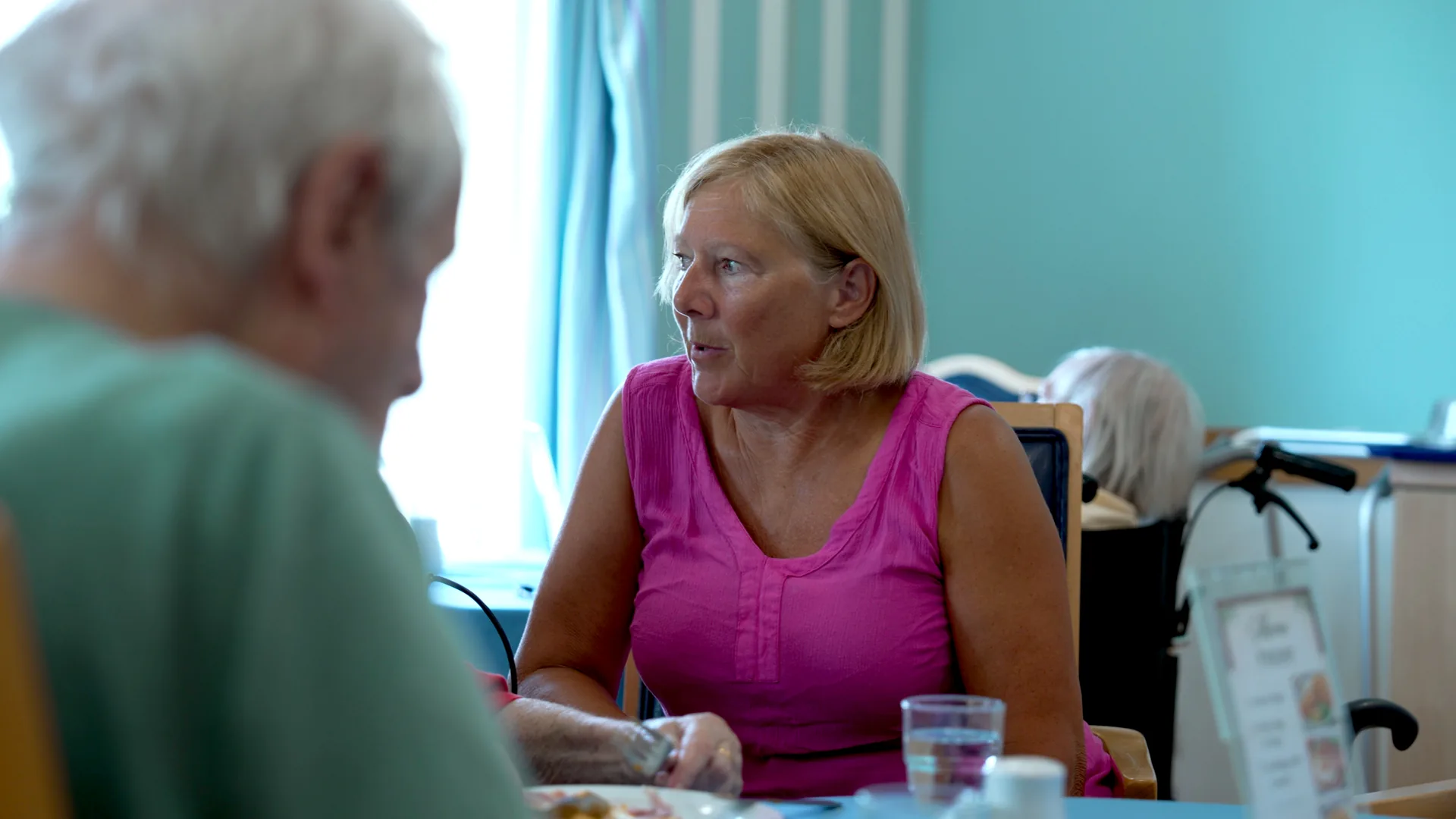
The searcher
No, and treating it as a rule will cost you enquiries. It is usually an adult child, but often another close family member: a spouse, a sibling, a niece or nephew, sometimes a grandchild who is simply the one who is good with a computer.
On the Lottie platform in the first quarter of 2026, 74% of care seekers who declared their relationship to the care recipient were searching for a family member, 17.1% were social workers or professional advocates, and only 7.1% were researching care for themselves (Lottie Care Index, Care Homes Q1 2026).
Taken together, 92.9% of those enquirers were arranging care for somebody other than themselves. So the safe assumption is not "a daughter in her fifties". It is a close family member, acting for someone else, who will have to explain this choice to other people.
The numbers
The person leading your enquiry is usually holding a job, a household and a worry at the same time. Carers UK's The tipping point, published in May 2026 and drawing on over 10,500 carers, found nearly half of working carers, 47%, are considering reducing their hours or leaving work altogether.
In the Care England and Log my Care study of 1,000 people arranging care, conducted by Sapio Research, 97% found arranging care difficult, two thirds began without clarity about the type of care required, and over half felt overwhelmed, anxious or unsure where to begin. Reputation was the top factor in the final decision at 30%, while only 19% used inspection reports.
A group of tired people, deciding quickly, about something none of them understands yet. Clarity is not a nice-to-have for that audience. It is the whole offer.
The other voices
The searcher rarely decides alone. Three other voices shape the outcome.
Where they can take part, their view usually carries the most weight. But the move is usually triggered rather than planned, and dementia-related care made up 47.1% of named-type care home enquiries on Lottie in Q1 2026, so the family is often deciding on someone's behalf. Write for both readers.
They shape the shortlist rather than make the choice, narrowing the field to homes with a vacancy and the right provision. Once you are one of three names on a piece of paper, the family goes home and looks all three up. What they find decides it.
They never searched and may never visit. They judge your home on whatever gets pasted into a message thread, often on a phone, with nobody there to explain it. They are looking for a reason to object.
What to change
The searcher becomes your advocate to the rest of the family. Four changes, in the order they pay back.
On the pages a stranger lands on. A relative who has never visited can watch it in ninety seconds and form a view. Real people only, never anything AI-generated.
The consulted relatives are looking for a reason to object, and an empty corridor gives them one.
A named person, a direct number and an honest statement of when you answer, so the family can say "I spoke to someone called Donna".
Not a number on a poster, but a clear explanation of what is included and how it works, so the searcher can pass it on without getting it wrong.
Film matters most here because it travels: why a relative's own account travels further than anything you can say yourself.
The avoidable four
Two failures in how homes reach the family, and two in what happens once they have.
Once they have found you
Silence between the enquiry and the visit. The group is discussing you in that gap whether you take part or not.
Marketing to fear rather than relief. It converts once, and it makes the rest of the family uneasy. What families are looking for is permission to stop worrying.
Cost and pace
It changes the shape more than the size. There are four pricing models you will meet, and the choice between them matters more than the figure attached to any one.
Price varies with scope, and anyone who quotes before understanding your occupancy position is guessing. We walk through the numbers for your home on a call.
How long before it shows? Weeks for the material, months for the visibility. A film and a clear enquiry path can change conversations with families already looking at you almost immediately, because they change what the searcher can forward. Being found by families who have not started looking yet is slower.
Who this is for
This is for homes with reasonable enquiry numbers and a conversion problem: plenty of first contacts, too few visits, visits that do not become move-ins. That gap is usually the rest of the family, and it is fixable.
Wait if nobody is finding you at all. If enquiries are a trickle, the constraint is visibility, not persuasion, so start with the wider picture on filling beds.
Common questions
Usually a close family member leads it, most often an adult child, but the final decision is normally agreed by a small group: the person who searched, the person who will pay or manage the money, the person moving in where they are able to take part, and one or two relatives who are consulted and can object. Marketing that convinces only the searcher stalls at the point they show it to everyone else.
No. It is usually an adult child, but often another close family member: a spouse, a sibling, a niece or nephew, or a grandchild. On the Lottie platform in the first quarter of 2026, 74% of care seekers who declared their relationship were searching for a family member and only 7.1% were researching care for themselves. Treat the searcher as a close family member rather than assuming a daughter in her fifties.
They shape the shortlist rather than make the choice. Social workers and professional advocates accounted for 17.1% of Lottie care seekers who declared a relationship in the first quarter of 2026. A professional often narrows the options to homes with a vacancy and the right provision, and the family then chooses between them, which is why your own materials still have to do the convincing.
Make everything you publish easy to forward. A short film of a real family, a page that loads quickly on a phone, a named person to contact and a clear picture of daily life can all be passed round a group chat without you in the room. The searcher is your advocate to the rest of the family, so give them something to argue with rather than a brochure.
Often yes, and where they can take part their view usually carries the most weight of anyone. But the move is frequently prompted by a sudden increase in need, and dementia-related care accounted for 47.1% of named-type care home enquiries on Lottie in the first quarter of 2026, so in many cases the family is deciding on someone's behalf. Speak to both: the person who will live there and the family carrying the choice.
Keep reading
What gets asked on the call and the visit, and what a good answer sounds like.
Do family testimonial videos work?Why a relative's own account travels further than anything a home can say.
The wider picture on filling bedsHow visibility, trust and timing fit together to raise occupancy.