The guide
Care homes attract self-funding residents by reaching the family member quietly carrying the decision, usually an adult child or another close relative, at the moment they are researching, and by giving them the reassurance they are looking for before they ever pick up the phone. That means being visible where families actually look, showing real life through the voices of families who already chose you, and making the next step feel safe rather than salesy.
Updated July 2026
Private beds fill when you reach the right person early and reassure them. In brief:

Who they are
Self-funding residents are those whose fees are paid privately by the resident or their family rather than arranged through the local authority. They matter because a home with a healthy share of private residents has more stability and more freedom to invest in the quality of life it offers.
The important thing is who actually makes the choice. It is usually a close family member, most often an adult child, but frequently a spouse, a sibling, a niece or nephew, or a grandchild. This person is rarely searching in a calm, planned way. They are often carrying the decision privately, alongside a full life and a good deal of worry, wanting to feel they are doing right by someone they love. Everything below follows from that single fact.
Where they look
They look online first, and lean on directories, reviews and the home's own presence before they contact anyone. Directories do real work. They also have a ceiling.
Where it reaches its limit
Directories let families line homes up side by side on the same terms. What they cannot do is let your home speak for itself, in its own voice, to the person mid-decision. That gap is where private enquiries are won or lost, which is why the strongest approach pairs a good directory presence with a way to reach families directly.
What tips the decision
Reassurance, above almost everything else. Families want to believe the person they love will be safe, treated with dignity, and genuinely happy. Price and facilities matter, but they are rarely what tips a decision. What tips it is the feeling that this is the home where a parent will be looked after the way they would look after them themselves.
Reviews carry real weight in building that belief: more than 80 percent of care seekers rate the reviews on carehome.co.uk as extremely or very important when choosing a home (carehome.co.uk, 2025). The homes that win private residents make this reassurance easy to find rather than making families dig for it.
Reaching them
By being present in three places at once. Each plays a different role, and the strongest results come from using them together.
They put you in the comparison set families already trust. The adult child carrying the decision is also frequently on Facebook in the evening, where the 45 to 64 age group makes up roughly a third of UK users (Statista, 2025).
Your website confirms you are real, professional and worth a visit. It is where a serious family goes to decide whether to believe what they saw elsewhere, so it has to host your proof and answer their questions plainly.
Social platforms let the home speak before the enquiry comes in. A family who has watched a real daughter talk about her mother's move arrives warmer, more confident, and further along than one who has only seen a listing.
The strongest proof
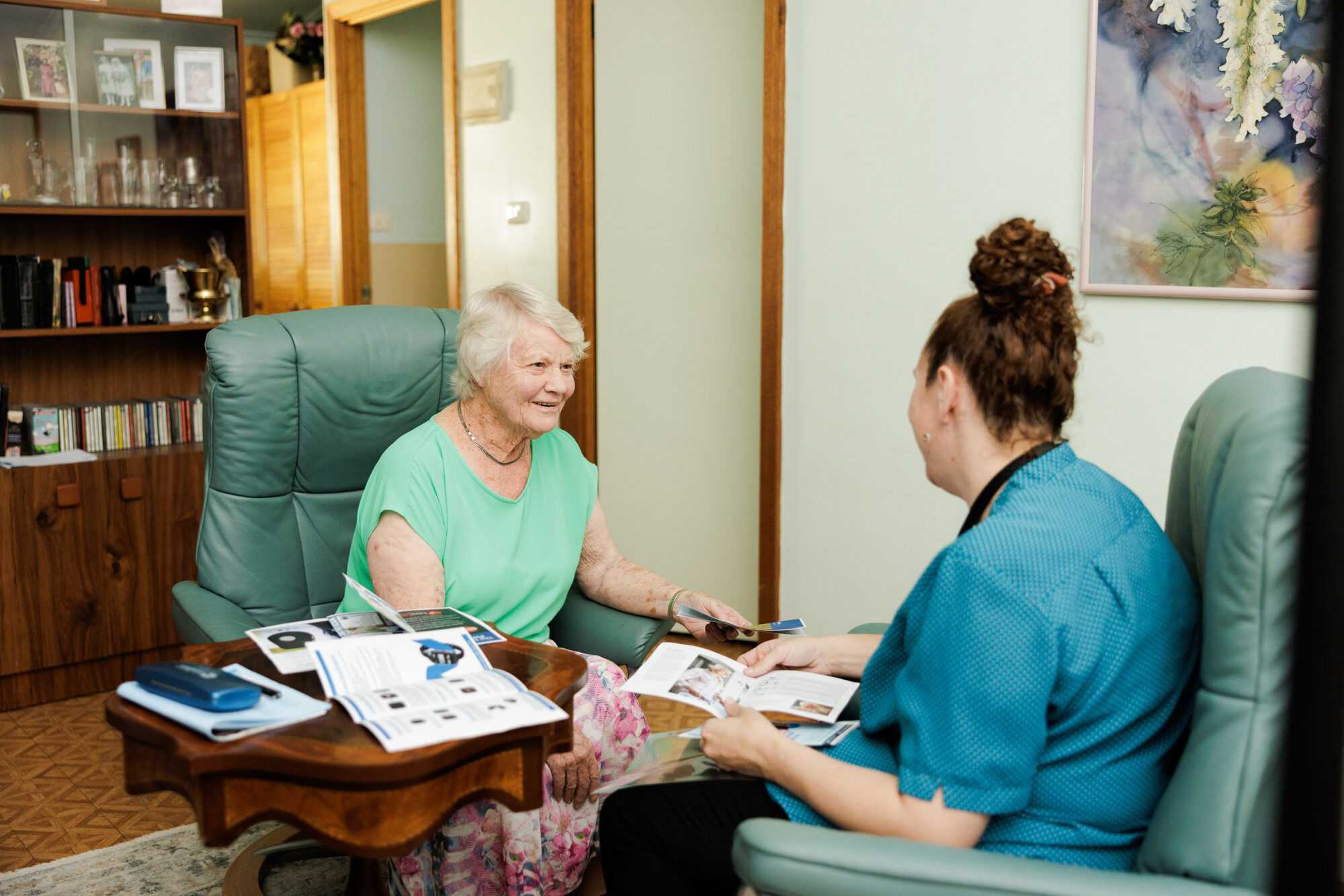
They replace claims with proof, in the most trusted voice there is: another family who made the same decision. A home can say it is warm and caring. A daughter saying, in her own words, that she finally sleeps at night because she knows her mother is safe, is something no brochure can match.
These films answer the exact worry the decision-maker is carrying, from someone who has already lived it. They are real people, never staged actors and never anything artificial, with consent and compliance handled properly. Almost nobody in the sector uses this well, which makes it one of the clearest ways to stand apart. There is more in our guide on whether family testimonial videos work for care homes.
How it builds
Any honest answer avoids promising a fixed number of weeks. It is steady visibility and trust rather than a single campaign that flips a switch.
Get seen where families already look, with your directory listing and your own site accurate, warm and complete.
Back that presence with real reviews and, where you have them, genuine family films that answer a worried relative's concern.
Meet the decision-maker on Meta at the moment they are quietly thinking about a parent, rather than waiting for a formal search.
Think in terms of results rather than retainers. Ask what a service is expected to deliver and how it is measured, the specifics worth walking through on a call.
Side by side
Each channel does a different job. This is a way to see how they fit together, not a ranking, because the best results come from combining them.
| Channel | What it does well | Its ceiling |
|---|---|---|
| Directories | Puts you in the comparison set families already trust; strong reviews build confidence | Cannot let the home speak in its own voice; you are compared, not chosen |
| Your own website | Confirms you are real, professional and worth visiting; hosts your proof | Families have to find it first, so it relies on your wider visibility |
| Meta and social | Reaches the decision-maker mid-scroll; lets the home start the conversation with real films | Needs genuine content and consistency; not a quick switch |
| Google and local search | Captures families actively searching by name or area | Answers demand rather than creating it; competitive for common terms |
Directories and Google both genuinely work, and most homes should use them. The point is that each has a natural ceiling, and the reassurance that finally tips a private family is usually built in the space they cannot reach. For the wider picture, see our guides on how to increase care home occupancy and whether Facebook and Meta ads work for care homes.
Common questions
It is usually a close family member rather than the resident, most often an adult child, but frequently a spouse, sibling, niece or nephew, or grandchild. This person is typically carrying the decision privately and looking for reassurance that they are doing the right thing, which is why marketing that reaches and reassures them directly is so effective.
Yes. Directories work well as the place families compare homes, and being present and well reviewed there matters. Their ceiling is that they cannot let your home speak in its own voice to the decision-maker, so the strongest results come from pairing a good directory presence with a way to reach families directly.
Family testimonial films are among the most powerful, because they answer a worried family member's exact concern in the trusted voice of another family who has already made the same choice. They are real people, with consent and compliance handled properly.
Meet them where they already are. The decision-maker is often on social platforms in the evening rather than running a formal search, so reaching them on Meta with genuine, warm content lets the home begin the conversation at the moment they are quietly thinking about a parent.
No, and it should not try to. Good marketing brings the right families to a home that deserves them. It cannot create a feeling the home does not earn in person, which is why the approach only works for homes genuinely proud of the care they give.
Keep reading
The full picture: where families decide, which channels reach them, and how quiet interest becomes a move-in.
Do family testimonial videos work?Why a real family's story is the most trusted proof a home has, and how it is done with care.
Do Facebook and Meta ads work?How paid social reaches the decision-maker before they search, and what makes an ad actually work.