The guide
Care home advertising is rarely wasted on the wrong channel. It is wasted at four points that sit either side of the advert itself: the area you cover, the person you reach, what you show them, and what happens in the hours after they click.
Updated September 2026
Get those four right and almost any reasonable channel will return something. Get them wrong and the budget is being spent perfectly on the wrong thing. In brief:
The numbers
Mediahawk's care homes trends report, spring 2026, built on anonymised call tracking from April 2025 to March 2026, found that calls and website visits to care homes both rose 9% year on year, while the visitor-to-call ratio fell 7.5%. More people are arriving, and each one is less likely to pick up the phone than a visitor was a year ago.
That is why the money disappears. It is very rarely the channel. It is the radius, the reader, the picture, and the silence after the click. Get those four right and almost any reasonable channel returns something. Get them wrong and no amount of spending fixes it.
The four leaks
Four things, in this order. A care home is a local business with an unusually small pool of genuine buyers, so each leak costs more than it would elsewhere. Each has a test you can run yourself in an afternoon.
| Where the budget leaks | What it looks like on a report | The test you can run today |
|---|---|---|
| The radius is too wide | Plenty of reach, plenty of clicks, very few calls | Look at the last twenty enquiries and note the postcode of the family. Set the advertising to that distance, not to the county |
| The advertising reaches the wrong reader | Reach in the wrong age bracket, low click rate | Check who the campaign is set to reach. If it is written to the future resident, it is aimed at the wrong person |
| The advert shows the building | Clicks that leave within seconds | Open your own advert on a phone. Is there a person in it, or only a corridor and a lawn? |
| Nothing catches the visit | Traffic that never becomes a call or a form | Enquire on your own website as a stranger and time how long the reply takes |

Leak one
Almost always. A home has to be close enough for a family to visit often, so the honest buying area is small, and it is usually smaller than the area the campaign is set to cover. Any spend that reaches beyond the distance a family will realistically travel every week is not building awareness. It is being spent on people who will never enquire.
The quickest audit anyone can run is to take the last twenty genuine enquiries, write down where each family lived, and look at the spread. Most homes find the answer is a good deal tighter than they assumed.
Setting the advertising to that real distance costs nothing, takes ten minutes, and it is the only change on this page that reduces waste immediately rather than gradually.
Leak two
Usually the adult child, though often another close family member: a spouse, a sibling, a niece or nephew, or a grandchild. They are almost never the person who will live in the home.
The person moving in
Ofcom's Online Nation 2025 report found UK adults spend an average of four and a half hours a day online, but that splits hard by age: six hours twenty minutes for 18 to 24 year olds, three hours twenty for over 65s. Facebook and Messenger together still reach 93% of online UK adults, and YouTube reaches 94%.
The family member making the arrangements is reachable for hours a day. The future resident, in most cases, is not.
Leak three
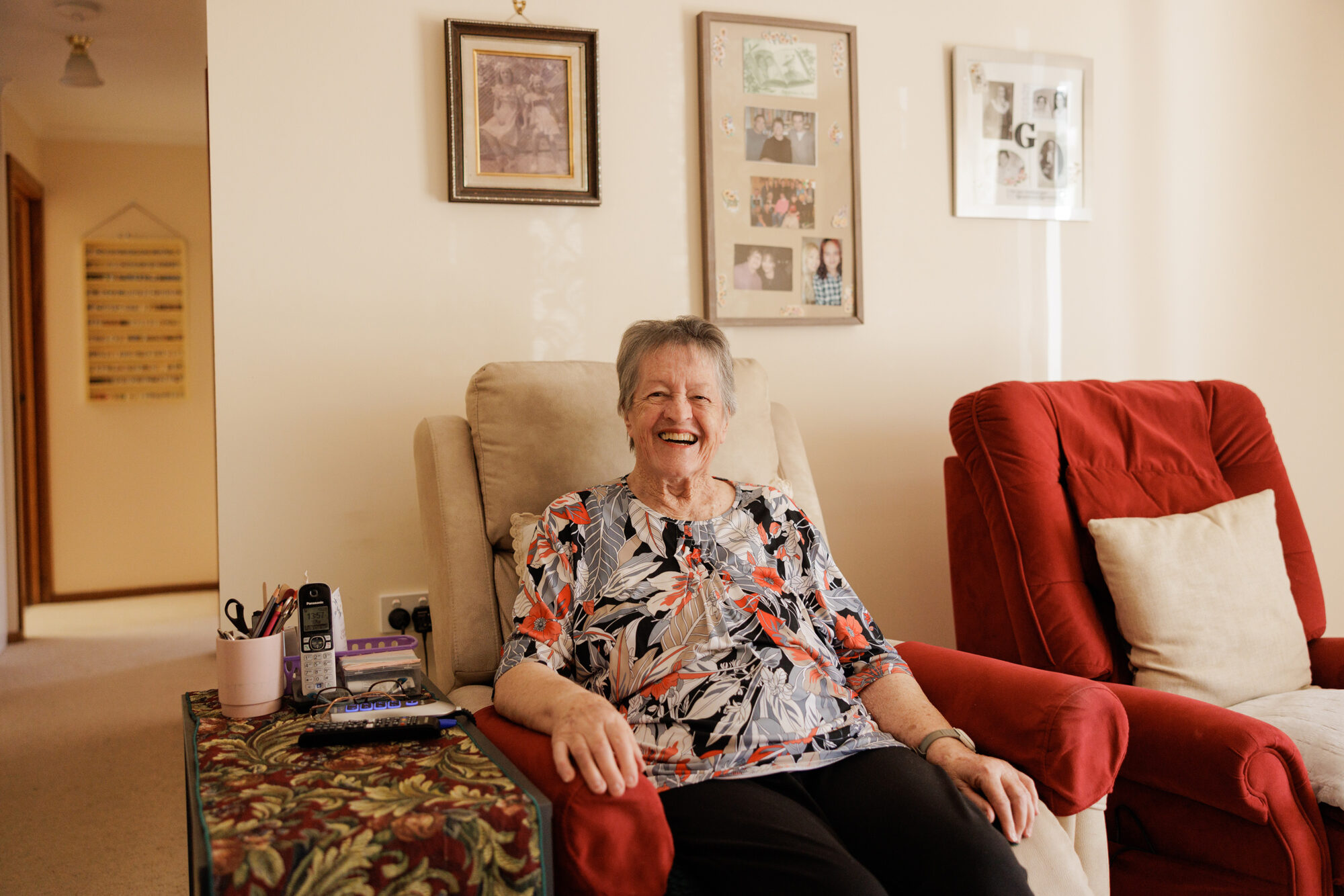
A person, not a building.
Families are not comparing premises at this stage. They are trying to work out what daily life in the home actually feels like, and whether they could live with the decision.
The same Care England research found reputation was the top factor when families chose a home, named by 30%, while only 19% used inspection reports at all. An advert showing an empty lounge answers a question nobody asked. An advert showing a real resident and a real member of staff, filmed properly with consent, answers the one they are all quietly asking.
Our films are always real people in real homes, never AI-generated, because the whole value of the format is that a family can tell the difference. If you are still weighing up whether paid social is the right place to start at all, that guide covers it in full.
Leak four
This is the leak that never shows up as a leak, because the report says the advertising worked.
Website visits to care homes, year on year.
Calls to care homes, year on year.
The visitor-to-call ratio. Families read for longer before they ring.
Source: Mediahawk, care homes trends report, spring 2026. If every visitor is worth less than they were, buying more visitors without improving what they land on costs more to reach the same number of calls. The money is better spent making the page worth arriving at, and making sure somebody answers.
The uncounted failure is the phone. A family who rings on a Saturday afternoon, reaches a voicemail and never calls back was paid for in full, and appears nowhere.
Timing and cost
Yes, and spending the same amount every month is a quiet source of waste. Mediahawk's spring 2026 data found that call volumes to care homes dip in the summer and winter months, while calls driven by the word "respite" peak in exactly those quieter months. The demand does not go away in the slow periods, it changes shape.
The same report notes web traffic from Google PPC up two percentage points while Google organic fell three. Paid search and directories both work here, with a ceiling: they capture families who have already started looking, and how paid social and a directory listing compare on speed to a filled bed is worth understanding before you split a budget.
How is it priced? Four models, frequently mixed together in one quote:
Ask which of the four you are being quoted, and whether media spend and management are separated on the invoice. We are happy to walk through how ours is structured on a call.
The avoidable four
Expect the first genuine enquiries within weeks on paid social, and the first move-in to take considerably longer, because families take months to decide and rarely decide alone. Judge a campaign at the enquiry stage first and the move-in stage second.
Every restart pays again for the learning period. Cutting a campaign at four weeks because no bed is filled usually happens just before the work starts to show.
Radius, creative and audience all move together, so nothing can be attributed to anything.
Clicks are cheap to buy and easy to buy badly. Enquiries, then move-ins, are the measures that matter.
Coverage at evenings and weekends is the cheapest improvement available to most homes.

Who this is for
This is for an owner, director or manager who already has some spend running and cannot see what it is returning. Fixing the four leaks will make a real difference within a month.
Wait if families cannot find your home in the first place, or if your website gives a visitor nothing to believe. Advertising into either sends paid visitors to a dead end, and the honest answer is to fix the destination first.
Common questions
The radius, more often than anything else. A care home advertising across a whole county pays to reach families who were never going to visit, because the home has to be close enough for regular visiting. Tightening the area a campaign covers is usually the single fastest reduction in wasted spend, and it costs nothing to change.
Not before you know which of the four stages is failing. Advertising that reaches the right families but sends them to a page that says nothing looks identical, on a report, to advertising that reached nobody. Check reach, then the click, then the page, then the phone. Stop only if the first stage is sound and the rest still cannot be fixed.
Usually the adult child, though often another close family member: a spouse, a sibling, a niece or nephew, or a grandchild. They are the person quietly carrying the decision, and they are almost never the person who will live in the home. Advertising written to the future resident reaches the wrong reader on the wrong device.
Yes, and flat spending across the year is a quiet source of waste. Mediahawk's spring 2026 care homes trends report found call volumes to care homes dip in the summer and winter months, while calls driven by the word respite peak in exactly those months. The demand does not disappear in the quiet periods, it changes shape.
There are four common models: a monthly retainer for management, a one-off project fee for a campaign build, media spend paid straight to the platform, and a results-based arrangement tied to move-ins. Media spend and management are separate things and should be quoted separately. Ask which of the four you are being sold before you compare two quotes.
Keep reading
Whether paid social is the right place to start, and what it does that search cannot.
Meta ads or a directory listing?How the two compare on reach, timing and speed to a filled bed.
The wider picture of filling bedsWhere advertising sits among everything else that raises occupancy.