The guide
The video ideas that work best are the ones that answer a question a family is still weighing: a family's own account of choosing the home, the manager introducing it, an ordinary day in the lounge and dining room, and a plain explanation of what a first visit involves. Facility tours and scenic montages are worth having, but they show the building rather than the people, so they come after the others.
Updated October 2026
What to do, in brief:
Ten ideas, ranked
Start with the family's account and the manager's introduction, because between them they answer the two questions that matter most before a visit: what was it like to choose this home, and who will I be speaking to? Most of these ideas can come from a single planned filming day, so the ranking is about what you lead with, not what you give up. The garden through the seasons is the exception, because it takes time to collect.
| # | Idea | The question it answers | The ceiling |
|---|---|---|---|
| 1 | A family's account of choosing the home | What was it like for someone in our position? | Needs a family willing to take part, with consent in place, and speaks for one family |
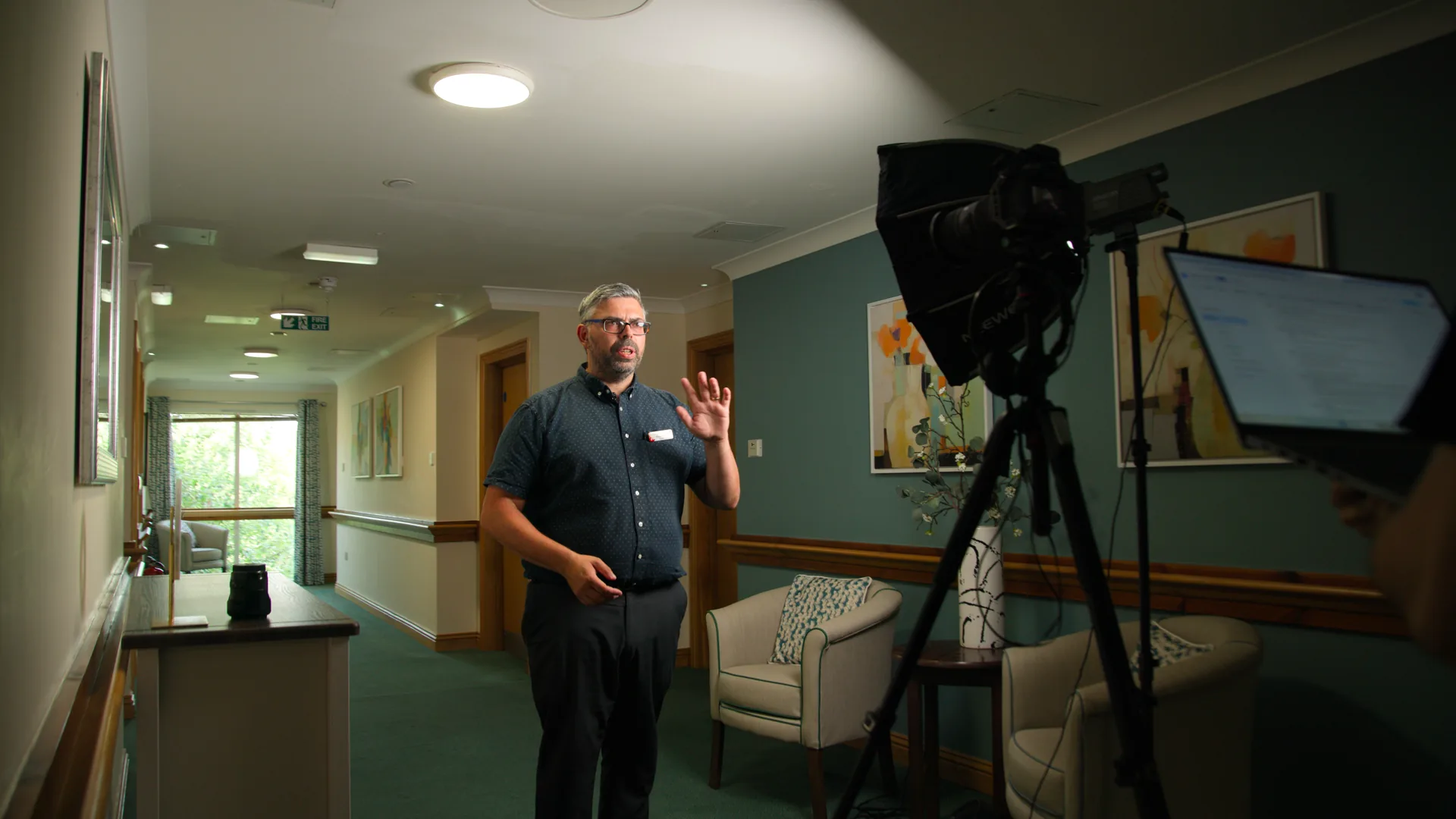
| 2 | The manager introducing the home | Who will I be speaking to, and how does the home help someone settle in? | Loses its value if scripted like a brochure |
| 3 | A day in the life | What does an ordinary day look like? | Shows routine rather than outcomes, and needs everyone filmed to have agreed |
| 4 | What a first visit involves | What will happen if we come to see the home? | Practical rather than emotional, and the visit has to match it |
| 5 | Meet the team | Who looks after people here? | Depends on staff being willing, and dates as the team changes |
| 6 | Activities, in short clips | Is there something my relative would enjoy? | Shows energy, not individual care |
| 7 | Mealtimes and the dining room | What is mealtime like here? | Easy to make look staged, so the ordinary lunch has to be the subject |
| 8 | The garden through the seasons | Can my relative get outside? | Slow to collect, so it works as supporting footage |
| 9 | One question at a time | A direct answer to something families ask on the phone | Needs a manager at ease on camera, and works only when short |
| 10 | The facility tour | What does the building look like? | Shows rooms, not people, so a family cannot judge the care from it |
Idea number one
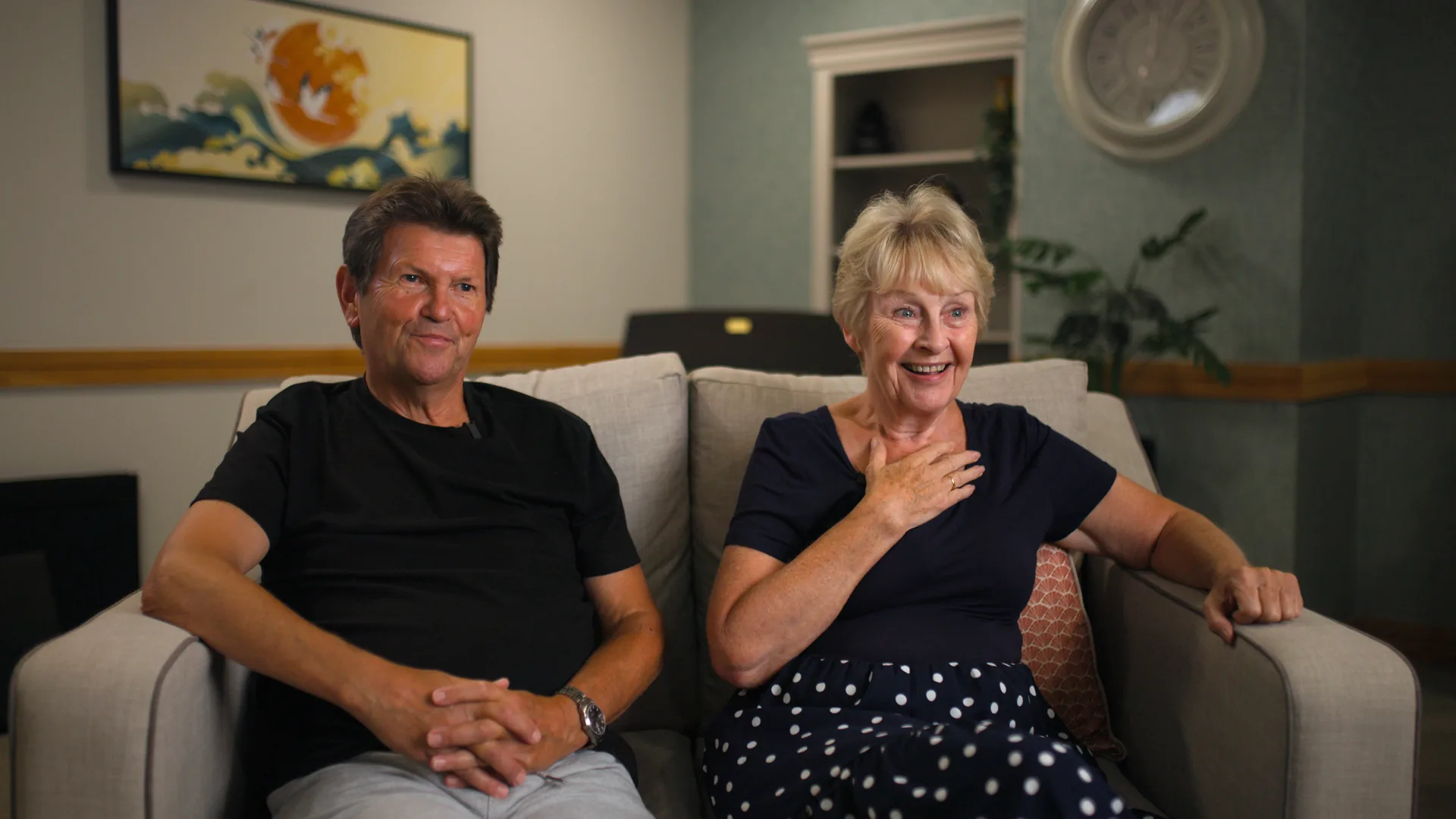
Most people arranging care are doing it for the first time, and hearing from someone who has just done it speaks to that uncertainty directly. The Care England and Log my Care study of 1,000 people arranging care for a family member, published in April 2026, found that 97% said arranging care was difficult. Families used directories (55%), online search (40%) and word of mouth (38%).
A family's account is the nearest a home can get to word of mouth in a form it can share. The most useful part is often a detail nobody could script: what the family was unsure about before the move, and what helped them decide. Our guide on whether family testimonial videos work for care homes covers the idea in full.
Length and placement
Under a minute for advertising and social media, and longer for a page where someone has chosen to watch. Wistia's 2026 State of Video report found that videos under a minute average a 52% engagement rate, with customer testimonials at 46%. That is data from a global video hosting platform, not care-specific, so read it as direction rather than a target.
Short cuts of the family's account and the manager's film, shown in Meta campaigns to families in the surrounding area. Our guide on placing a testimonial film goes through the options.
The full versions, next to a clear way to contact the home. This is where someone who has chosen to watch can take their time.
Short clips on the Google Business Profile, a channel on YouTube, and a film sent on to a family who has asked a question.
Where families already watch
Ofcom's Online Nation report, published in December 2025, shows how widely the platforms a home would use are already used across the UK.
Getting going
Four steps, in this order.
What do families ask on the phone, and what do they ask on a visit? These shape every idea.
Pick the three from the table that answer those questions, usually a family's account, the manager and a day in the life.
Agree who can take part and put consent in place for everyone who appears, before anyone is filmed.
Make a short cut of each film and decide where each one will be shown before the day, not after it.
What goes wrong
Four things go wrong most often, and all four can be avoided in the planning.
A film of rooms tells a family what the home looks like. They are usually also asking who will look after their relative.
A single long film is hard to use in advertising. Plan the short cuts at the start.
A manager reading lines sounds like a brochure. Answering real questions as they would at the front door reads as genuine.
Consent is the stage that slips and the one that matters most. Settle it with your team before the day.
Cost and timing
Cost depends on the pricing model, so ask which one you are being offered. There are four common models:
Whichever you are offered, ask what you own afterwards, who arranges consent and whether short versions are included. Heritage works on results, not retainers: the fee is tied to a resident moving in, the home controls its own ad budget, and the specifics are walked through on a call.
Expect roughly six weeks from the first conversation to finished films. The filming itself is a single day, and consent is the stage most likely to slip.
Be honest about it
Film cannot cover a gap in the care, and it should not try to.
Worth waiting
Enquiries are going unanswered, a concern about care needs resolving, or there is no one willing to be on camera. Settle that first and the film will have something true to show.
Where we fit
We make family-story films, manager films and daily-life footage in one shoot day at the home, along with photographs, and the home keeps them. They are real people, never actors and never AI, with consent handled for everyone who appears. The content runs in Meta campaigns aimed at families in the surrounding area, with an enquiry page built alongside.
If you would like to talk through which ideas suit your home, that is a good place to start. Our guide on which film to make first compares five formats, and showing families daily life covers the day-in-the-life idea. You can also see the films we make.
Common questions
A family's own account of choosing the home, alongside a short introduction from the manager. Between them they answer the two questions families weigh most before a visit: what was it like for someone in our position, and who will I be speaking to. A day in the life is a natural third.
Yes, for small informal clips such as an activity or the garden. It has a ceiling, because sound and lighting limit it for the films a family relies on most, which are the family's account and the manager's introduction. Those usually benefit from planning and proper recording.
The films that help most do. Heritage films real people, never actors and never AI, and consent is handled for everyone who appears. Anyone can say no.
Three is a sound start: a family's account, a manager introduction and a day in the life. Cut each into a short version for advertising and keep the longer version for the website. More can follow from the same filming day or later.