The guide
The fastest way to fill an empty bed is usually to convert more of the families who are already enquiring, then add new families on top. Answering every enquiry the same day, making the first visit feel like the home's real daily life, and following up warmly tend to move a bed in weeks, while advertising, a stronger website and a stronger reputation compound over months.
Updated October 2026
Speed comes from the order you do things in. In brief:
By speed
Some levers pay back within weeks and some within months, and the quickest ones are about the families you already have. The table sorts the main options by speed, with the honest ceiling of each. Directories, Google and advertising all work; the question is how fast and how far.
| Lever | Typical speed | What it needs | Ceiling |
|---|---|---|---|
| Same-day response and follow-up on every enquiry | Days to weeks | Someone answering the phone and replying warmly, every day | Limited by the number of enquiries arriving |
| A visit that shows real daily life | Weeks | A prepared welcome, time with the manager, a chance to meet residents and staff | Limited by how many families visit |
| A complete, current directory and Google profile | Weeks | Accurate details, recent photos, a manager who replies to reviews | Puts you beside competitors, it does not choose for the family |
| Recent family reviews | Weeks to months | A simple, gentle ask to families who are happy to help | Builds slowly, then protects every other channel |
| Advertising to families before they search | Weeks to months | A clear message, video of real families and staff, an enquiry path that works | Needs the basics behind it to convert |
| Website and search visibility | Months | A site that answers families' questions, content that is kept fresh | Slowest to start, most durable once built |
For the channels themselves, see the four channels ordered by how quickly they pay back.
The first week
Start with four steps, in this order: look at how enquiries are answered, improve the first visit, refresh your profiles, and ask for recent reviews. Each takes days, not months, and each helps the families who are already deciding.
Check who picks up the phone, what happens out of hours, and how quickly emails and form messages get a human reply. A warm, unhurried call is often the first thing a family judges.
Let the family see a real lunchtime, an activity, a resident chatting with a carer. They are looking for an honest picture of what ordinary days feel like.
Update the Google Business Profile and directory listings with accurate details and recent photos, and reply to reviews.
A short, kind message to families who have said thank you, with a direct link, is often enough.
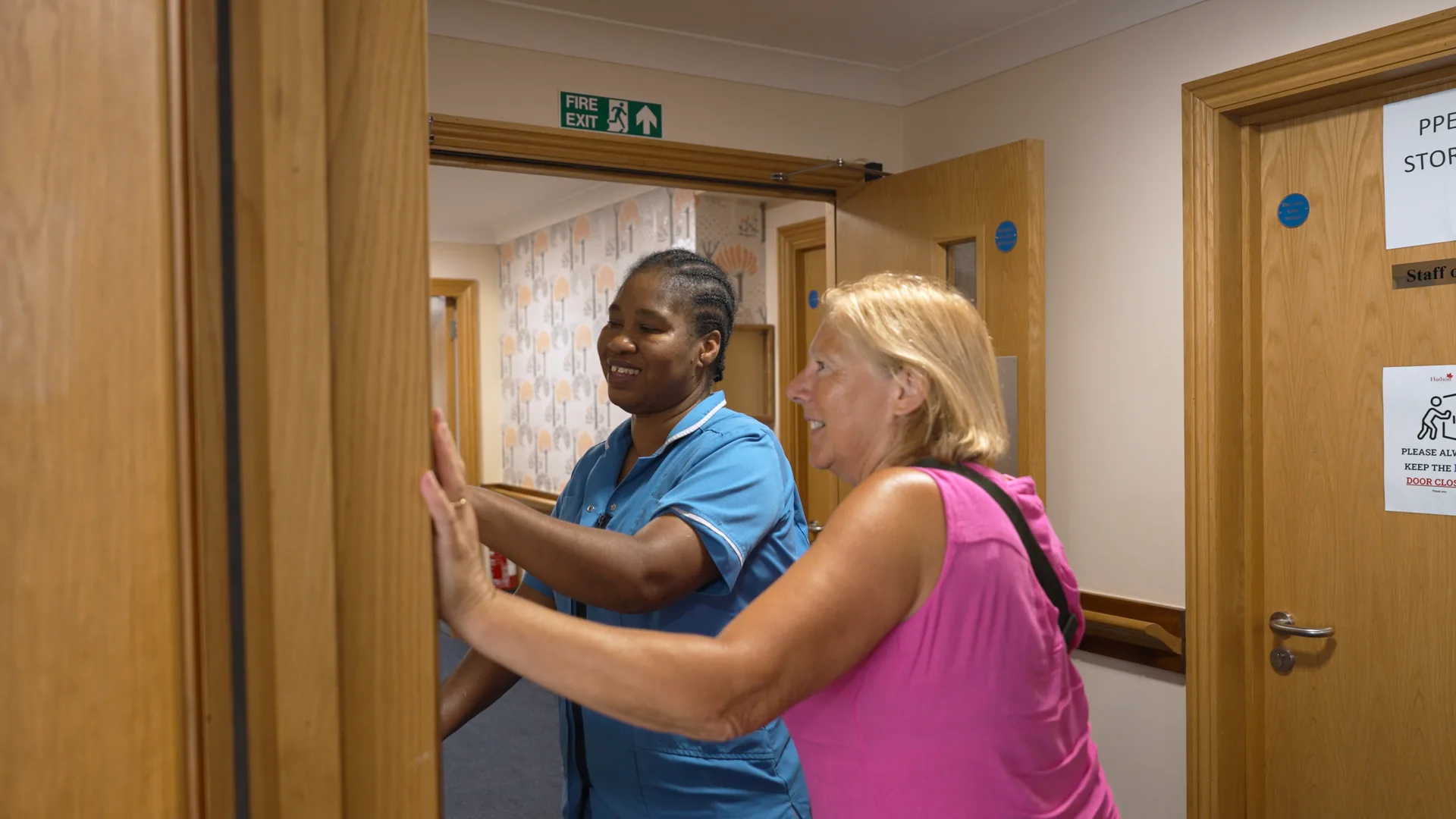
The first call
Because families are choosing under strain, and they notice how they are treated. In the 2026 Care England and Log my Care survey of 1,000 people arranging care, 97% found it difficult, and reputation was the top factor in the final decision at 30%. A prompt, caring response is part of that reputation in the moment a family meets it.
Traffic is not the whole picture either. Mediahawk's Care Trends Report for spring 2026 found care home calls and website visitors both up 9% year on year, while the visitor-to-call ratio fell 7.5%. More people are looking and a smaller share are picking up the phone, which makes the page they land on and the way the first call is handled count for more.
Where families look
Most families start with directories and online search, then check a home's reputation and ask people they trust.
In the 2026 Care England and Log my Care survey, 55% used directories, 40% used online search and 38% relied on word of mouth. Fast progress means being accurate and convincing in every one of those places at once.
This is also why a directory listing alone has a ceiling: it puts your home beside its competitors at the moment a family compares them. Directories are worth keeping and keeping current. They are one part of how a family comes to choose a home.
Advertising
Advertising can fill beds faster than waiting to be found, because it reaches families before they begin to search.
What it needs
Advertising works best on top of the basics above. If the phone goes unanswered or the profile is out of date, the extra interest has nowhere to land.
For a fuller comparison of paid reach against directory listings, see how a directory listing and advertising do different jobs.
How long
There is no honest published UK benchmark for how long it takes, so any figure quoted without a source should be treated with caution. It depends on how many families are enquiring, how quickly they decide, and how well the home converts the interest it gets.
The first number to know. It shows whether volume or conversion is the constraint.
The second. It shows how well the first call and the follow-up are working.
The third. It shows how well the visit itself is landing.
A more useful measure is your own: how many enquiries arrive each month, how many become visits, and how many become moves. Tracking those three numbers shows where beds are being lost. What can be said is that the decision is a hard one and families take it seriously.
When the care is good
If your care is strong and the beds are still empty, the gap is usually in how families discover and judge the home, not in the care itself.
Read more on when the care is good but the beds are still empty, and on what raises occupancy over the longer term.
Who this is for
This is for owners, directors and registered managers of older people's care homes with empty beds now.
Heritage Care Partners works with older people's care homes on exactly this, helping them reach families before they search and show what daily life is really like, using real family and staff films.

Common questions
The fastest gains usually come from the families already enquiring: answering every enquiry the same day, making the first visit feel like the home's real daily life, and following up. Advertising and a stronger website add new families, but they take longer than fixing the conversion of the enquiries you already have.
There is no honest published UK benchmark, because it depends on enquiry volume, the type of vacancy and how quickly a family decides. What can be said is that families research for a while before they choose: in the 2026 Care England and Log my Care survey of 1,000 people arranging care, 97% found it difficult.
Directories work and are where many families start: 55% used them in the 2026 Care England and Log my Care survey. The ceiling is that a listing puts your home beside its competitors, so a complete, current profile helps but it does not by itself make a family choose you.
Advertising can reach families before they start searching, which directories and Google cannot do. It works best once the basics are in place: a website that answers questions, accurate profiles and a fast, warm response to every enquiry.
Keep reading